 Research use only
Aesthetics
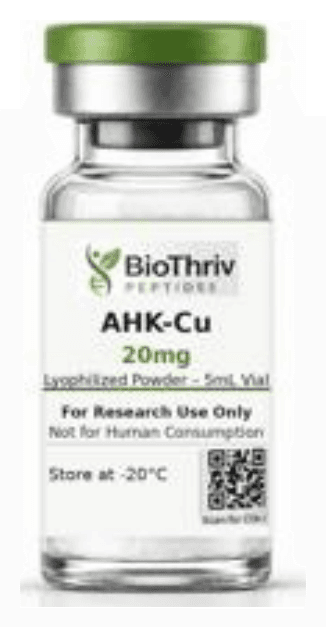
AHK-Cu
Size
- Size
- 20 mg
- Form
- Lyophilized powder
- Purity
- ≥ 99% (per COA)
- COA
- Linked per batch
$87.50
Buy more, pay less
- 5+ of the same compound — 10% off
- 11+ of the same compound — 20% off
- any 3 different compounds — 20% off
Applied automatically in the cart. You always get the better of the two.
Build a stack of 3+ compounds for 20% off — your stack totals live in the bench tray, with the research-use-only acknowledgment captured at checkout.
For laboratory research use only · Not for human consumption
Research handling note
For laboratory research use only — not for human or veterinary use. Handle with appropriate PPE in a controlled lab setting. Store lyophilized material at -4 °F (-20 °C), protected from light and moisture; once reconstituted with bacteriostatic water, refrigerate and use within the documented window. Confirm identity and purity against the batch COA before use.
Quality & testing
Every batch is independently third-party tested for identity, mass, and purity, and ships with a lot code you can verify. How we test →
Reference data
AHK-Cu is the copper(II) complex of the tripeptide alanyl-L-histidyl-L-lysine (AHK).
- Class
- Copper(II) tripeptide complex
- Also known as
- Copper tripeptide-3 · Ala-His-Lys copper complex · Tripeptide-3
- Appearance
- Blue to blue-purple lyophilized powder
- Storage
- Store lyophilized at -4 °F (-20 °C), protected from light. After reconstitution, keep refrigerated at 36–46 °F (2–8 °C).
- Reconstitution
- Soluble in bacteriostatic or sterile water.
Sequence
Ala-His-Lys (copper-bound)
Authoritative references
Reference data is provided for laboratory identification only. Values are sourced from public chemistry databases; confirm against the batch COA. Not for human or animal use.
Product reviews
Ratings reflect product quality — purity, labeling, packaging, reconstitution, and shipping. Research use only.
No reviews yet. Be the first to rate this product.
Sign in to leave a product-quality review.
Researchers also explore
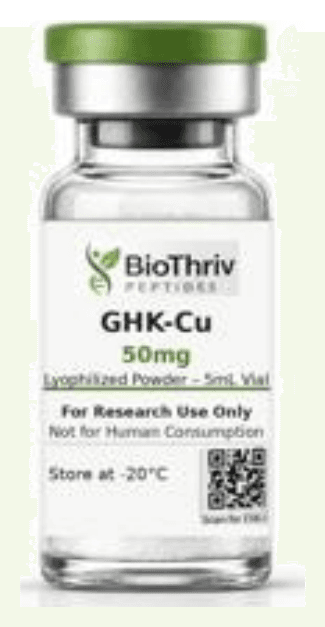 AestheticsRUO
GHK-Cu
Lyophilized powder